Koso EPC815 Double Acting Electro-Pneumatic Valve Positioner for Precision Control

Product Description
Product Description
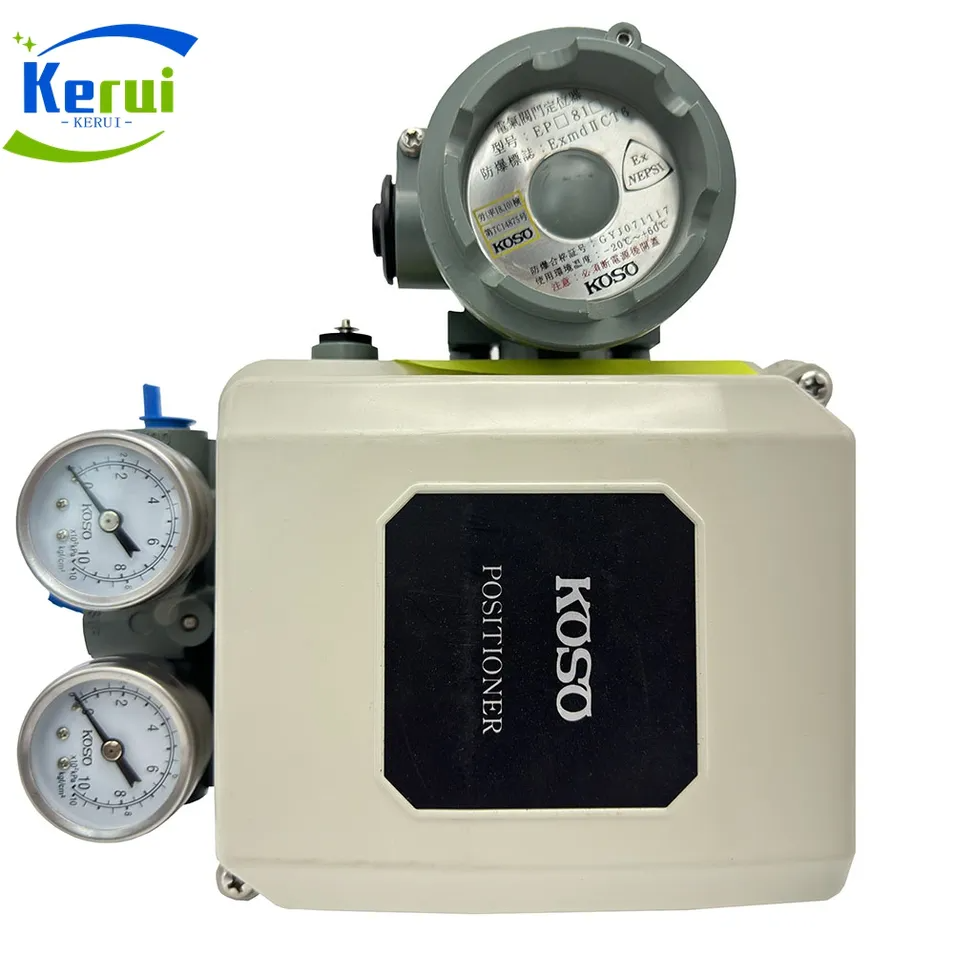
Koso Electropneumatic Valve Positioner EPC815
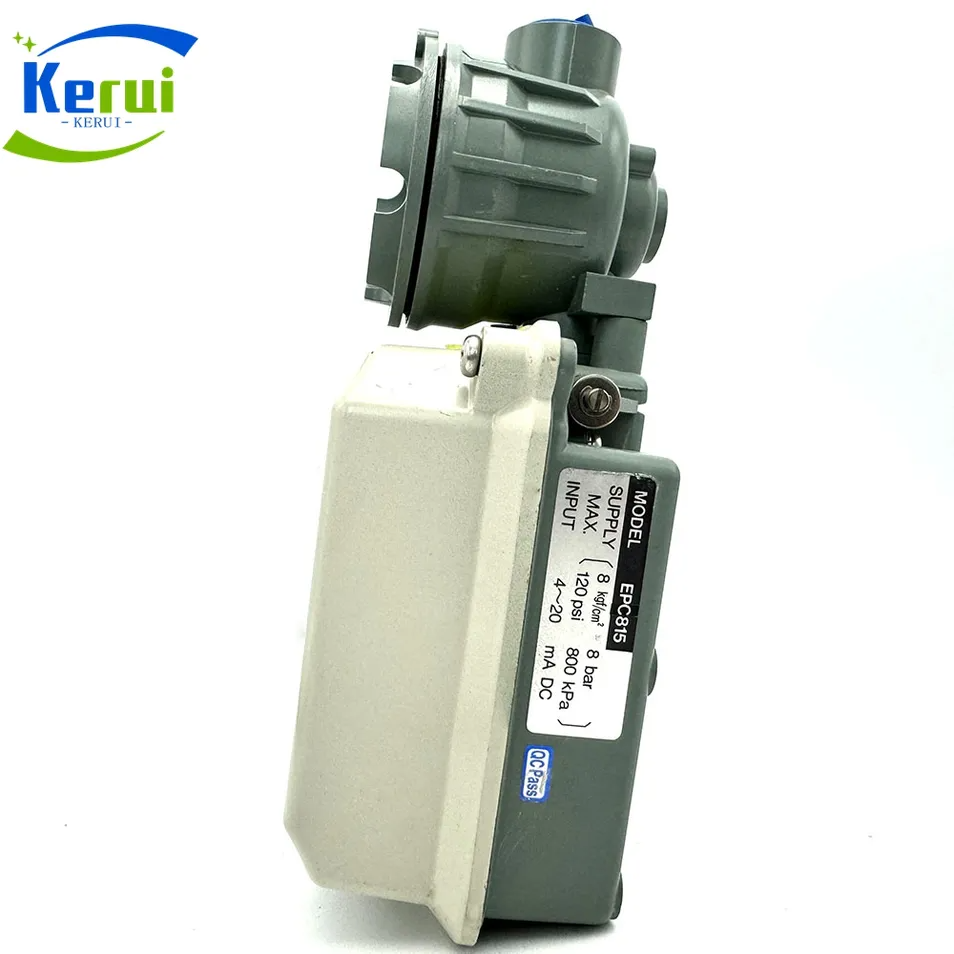
The KOSO EPC815 is an electro-pneumatic positioner designed for linear travel actuators. It is an essential component in industrial process control systems. The input signal is typically 4 - 20 mADC (standard), and it can also support split-range signals such as 4 - 12 mADC / 12 - 20 mADC. It converts the electrical input signal into an appropriate air pressure output to precisely control the movement of the linear actuator. Meanwhile, it feedbacks based on the stroke of the actuator to form a closed-loop control system, ensuring that the actuator's stroke accurately follows the control signal, thus achieving precise positioning of the valve.
Benefits
Accurate Control: Converts electrical signals to pneumatic signals precisely and feedbacks based on actuator stroke, ensuring accurate valve positioning. This helps to improve the control accuracy of the valve, making the valve's opening degree accurately correspond to the control signal, and is beneficial for maintaining stable process parameters in industrial production.
Adaptability to Different Processes: The adjustable output characteristics and split-range function enable it to adapt to various process control requirements, such as different flow characteristics needed in different production stages or different control requirements for multiple valves in a system.
Stable Operation: The stable performance design, such as the multi-loop force balance and reliable components, reduces the occurrence of oscillations and failures, ensuring the stable operation of the valve and the entire production process, reducing maintenance costs and production interruptions caused by equipment failures
Adaptability to Different Processes: The adjustable output characteristics and split-range function enable it to adapt to various process control requirements, such as different flow characteristics needed in different production stages or different control requirements for multiple valves in a system.
Stable Operation: The stable performance design, such as the multi-loop force balance and reliable components, reduces the occurrence of oscillations and failures, ensuring the stable operation of the valve and the entire production process, reducing maintenance costs and production interruptions caused by equipment failures
Features
Input Signal Compatibility: Accepts a standard 4 - 20 mADC input signal, and also supports split-range operation for more flexible control scenarios.
Output Characteristic Adjustability: The output characteristic can be linear by default, and it can be changed to Quick Open or Equal Percentage via cam adjustment, meeting different process control requirements.
Good Compatibility and Interchangeability: Has good compatibility and universal interchangeability, suitable for a wide range of applications.
Stable Performance: With large pneumatic power and fast action speed. The force balance adopts a multi-loop design, which is not easy to oscillate and has quite stable action performance.
Reversible Action: The positive and negative action modes of the positioner can be easily adjusted and calibrated.
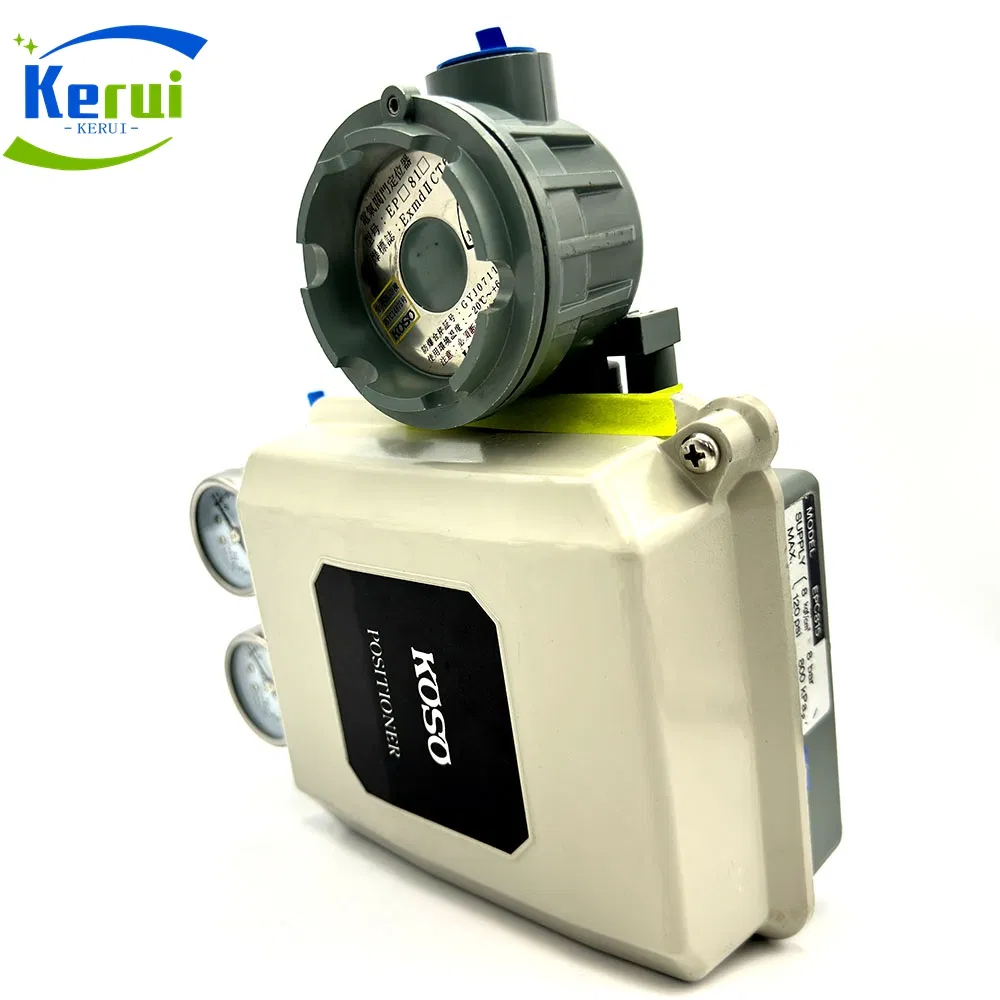
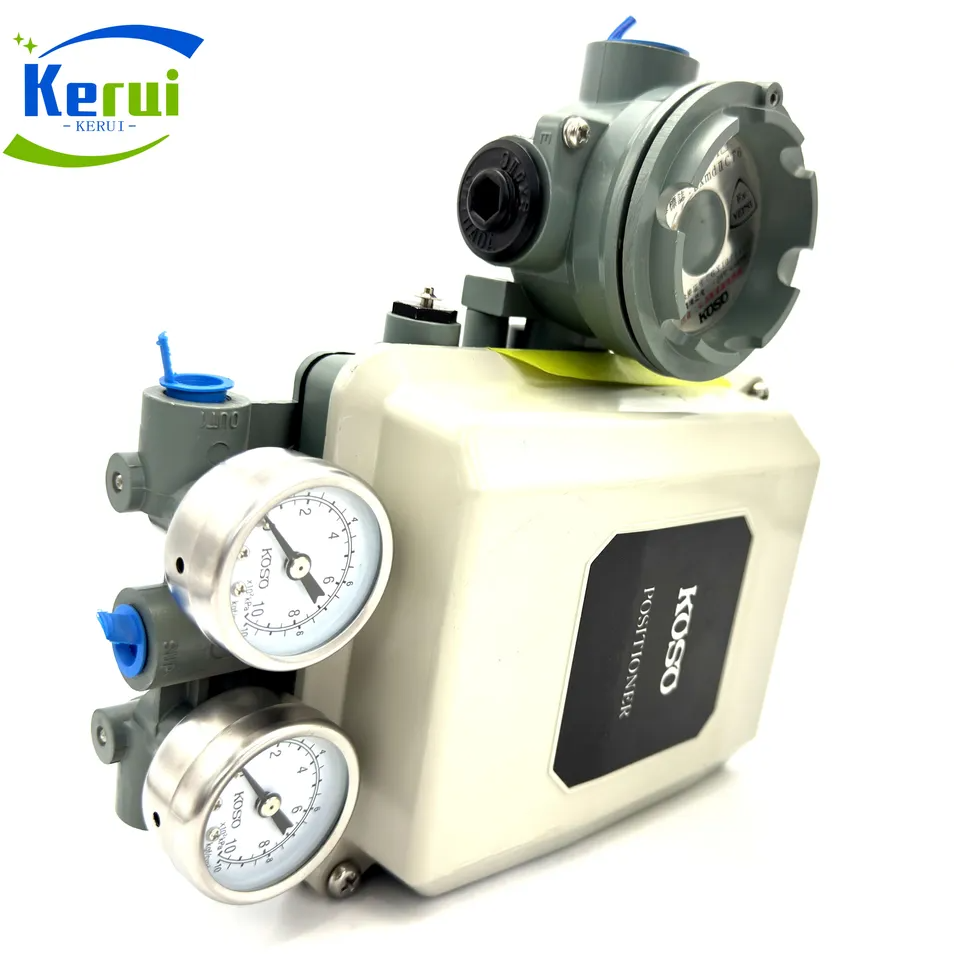
Compact and Reliable Structure: The components are precisely die-cast, with a sophisticated manufacturing process for the appearance and internal structure. The overall structure is compact. It uses stainless steel fasteners and a spraying process, having good anti-corrosion performance.
Convenient Adjustment and Installation: The range and zero adjustment knobs are of handwheel type, convenient for adjustment and equipped with a locking device. It is equipped with installation plates and accessories suitable for various types of actuators, making installation and adjustment easy. There are also installation screw holes at the bottom of the positioner and optional transition connection installation plates, which can be conveniently installed on various pneumatic actuators.
Optional Damping Mechanism: Can be equipped with an adjustable damping mechanism as required, so that it has the characteristic of adjustable output flow
Output Characteristic Adjustability: The output characteristic can be linear by default, and it can be changed to Quick Open or Equal Percentage via cam adjustment, meeting different process control requirements.
Good Compatibility and Interchangeability: Has good compatibility and universal interchangeability, suitable for a wide range of applications.
Stable Performance: With large pneumatic power and fast action speed. The force balance adopts a multi-loop design, which is not easy to oscillate and has quite stable action performance.
Reversible Action: The positive and negative action modes of the positioner can be easily adjusted and calibrated.
Compact and Reliable Structure: The components are precisely die-cast, with a sophisticated manufacturing process for the appearance and internal structure. The overall structure is compact. It uses stainless steel fasteners and a spraying process, having good anti-corrosion performance.
Convenient Adjustment and Installation: The range and zero adjustment knobs are of handwheel type, convenient for adjustment and equipped with a locking device. It is equipped with installation plates and accessories suitable for various types of actuators, making installation and adjustment easy. There are also installation screw holes at the bottom of the positioner and optional transition connection installation plates, which can be conveniently installed on various pneumatic actuators.
Optional Damping Mechanism: Can be equipped with an adjustable damping mechanism as required, so that it has the characteristic of adjustable output flow
Application
Petroleum Industry: Used in processes such as oil refining, oil transportation, and chemical production in refineries, to control the flow, pressure, and temperature of various media by accurately positioning valves, ensuring the stable operation of the production process and product quality.
Chemical Industry: In chemical plants, it is applied to control valves in different chemical reaction processes, distillation processes, and fluid transportation systems, helping to accurately control the addition of raw materials, the flow of reactants and products, and maintain the stability of chemical reactions and process conditions.
Power Generation Industry: Such as in thermal power plants, it is used to control valves in systems such as steam supply, water supply, and fuel supply, ensuring the stable operation of the power generation equipment and the efficient conversion of energy.
.
Chemical Industry: In chemical plants, it is applied to control valves in different chemical reaction processes, distillation processes, and fluid transportation systems, helping to accurately control the addition of raw materials, the flow of reactants and products, and maintain the stability of chemical reactions and process conditions.
Power Generation Industry: Such as in thermal power plants, it is used to control valves in systems such as steam supply, water supply, and fuel supply, ensuring the stable operation of the power generation equipment and the efficient conversion of energy.
.
Specification
Model | EPC815 |
Type | Electro-pneumatic positioner (designed forlinear travel actuators) |
Input Signal | - Standard: 4–20 mADC - Split-range: 4–12 mADC / 12–20 mADC |
Input Impedance | 250 ohms (for 4–20 mADC input) |
Output Signal (Air Pressure) | - Usual range: 0.02–0.1 MPa - Optional: Higher ranges (e.g., 0.14–0.5 MPa) may be available |
Rated Travel | Typically 10–150 mm (linear stroke, varies by actuator compatibility) |
Air Supply Pressure | 0.14–0.5 MPa (dependent on output pressure range selected) |
Air Consumption | ~5 NL/min (at standard supply pressure, typical for similar models) |
Hysteresis | ≤1% of full travel (industry standard for precision positioners) |
Dead Band | ≤0.4% of full travel (high-precision control characteristic) |
Output Characteristics | Linear (adjustable via cam for equal percentage or quick open if applicable) |
Explosion-Proof Rating | May comply with standards like IECEx, ATEX (optional, model-dependent) |
Operating Temperature | -20°C to +60°C (explosion-proof variants) -40°C to +80°C (standard) |
Relative Humidity | ≤95% (non-condensing) |
Air Supply Connection | G1/4" or Rc1/4" (standard pneumatic thread) |
Housing Material | Aluminum alloy with corrosion-resistant coating |
Weight | ~3.8 kg (varies slightly by configuration) |
Mounting | Compliant with ISO 5211 standard (direct mount on linear actuators) |
Feedback Mechanism | Mechanical linkage or potentiometer (for stroke feedback) |
Optional Features | - Damping adjustment - Fail-safe mode - Digital display (for some variants) |